Prepping, homesteading and living the simple, green, independent life.
Showing posts with label Energy efficiency. Show all posts

Wednesday, September 1, 2010

You Know You're Getting Old When...

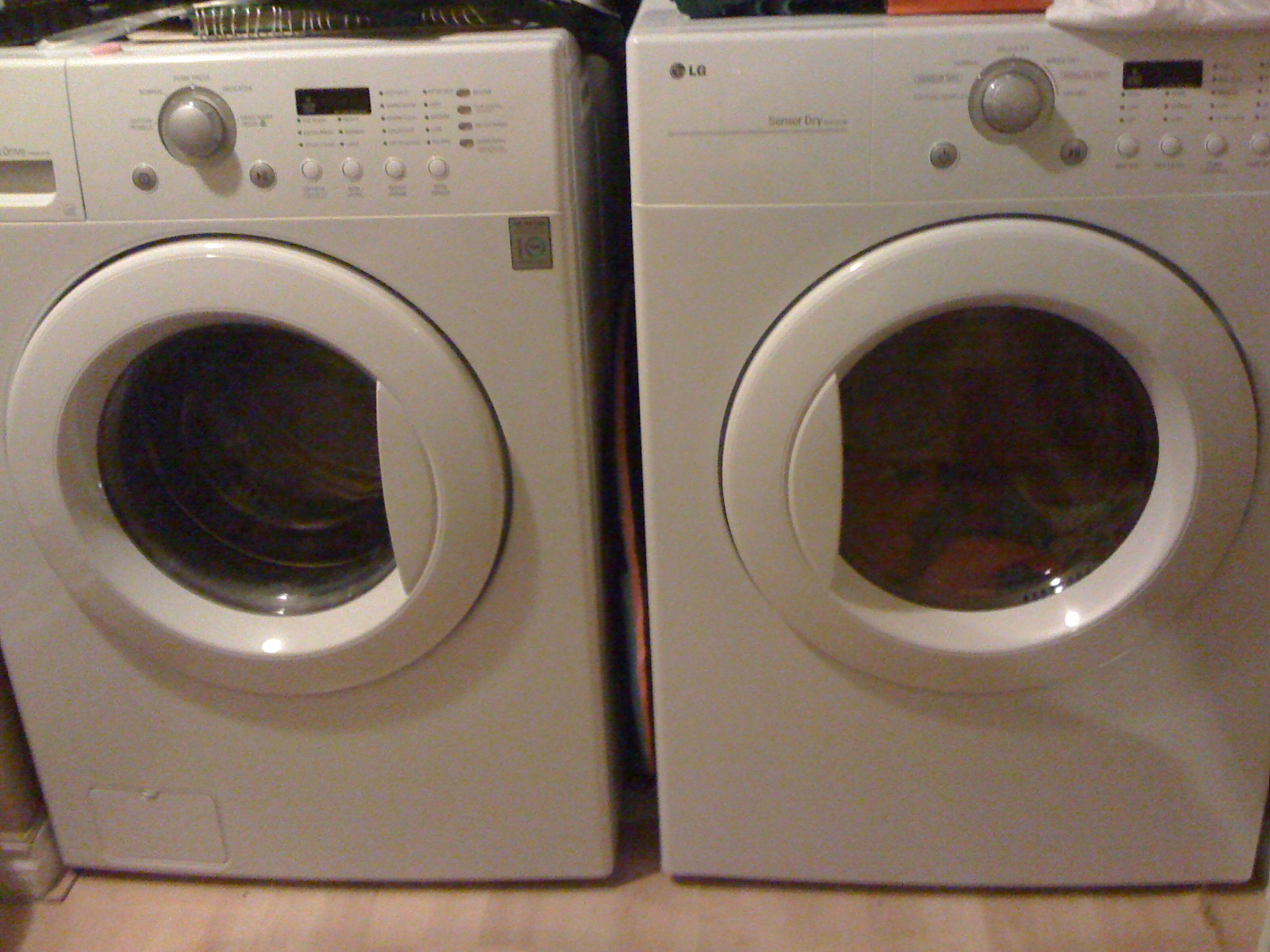
A few weeks back we received our new high-efficiency front loading LG washer and dryer set and I have to say, I'm pretty impressed by them.
 
The set was only around $1000 (on sale) but I felt like I'd gone from a Chevette to a Cadillac when compared to our old set.  A cute little luxury feature is that they play a little song when a load is done.  I told my wife I've always dreamed of having a somebody who loved housework so much that it sang to her.
 
The washer is very efficient at conserving water.  In fact, at first we weren't sure if we hooked it up properly because we couldn't see any water through the glass door.  It turns out that the machine weighs how much clothes are in it and only uses enough water to soak the clothes. I'm very curious to see how this affects our next water bill because I estimate we've gone from using approx. 20 litres a load to maybe only 4 or 5.
 
Although these style of washer do take longer to clean a load (about an hour), we can do much larger loads so the time spent works out to about the same.
 
Another thing that's great about the washer is that it spin-dries the clothes so well that they come out of the washer just damp and almost dry.  Sometimes I have to think twice if a load has even gone through the washer since so much water is removed. 
 
As for the dryer, I'm a little disappointed that it was rated as only average when it comes to energy use, however we're noticing that most loads get dried in under 25 minutes. Not only does the washer do such a great time spin-drying, but the dryer also has a sensor that can tell when the clothes are dry and it will shut itself off.  Very often the timer will show 30 minutes or so left but then a couple minutes later it shuts off because the clothes are dry!
 
In a few years time, after we build our next house, I'd like to look into getting a similar style propane or natural gas dryer.  This would really reduce our energy use.  Sure we could use a clothesline to dry our clothes, we used to and probably will again some day, but with two little kids it's much easier to just use the dryer.
 
On the "luxury" side of things I'm impressed by how huge the interior of the dryer is and it's kinda neat to have a light inside it.
 
So far the only minor downside to these is that I find we have to remember to leave the washer door open to allow it to dry out.  The front loading door is water/air tight and I've noticed that if we forget to leave the door open it is still damp inside days later.  I'm afraid that this could lead to a musty smell and maybe mold which probably explains why the washer has a "self-cleaning" feature.
 
We're pretty happy with our new washer and dryer set but also a little depressed.  When you reach the stage that the most exciting thing in your life is your new washer and dryer you know you're getting old!

Wednesday, May 12, 2010

Do It Yourself Home Improvement: Book Review

I love the books done by DK publishers; their books are always very informative and very visual with nice photos to help explain the topic.

This is why when I was at Costco the other week I had to pick up the book, "Do-It-Yourself Home Improvement: A Step-By-Step Guide".

My wife asked me why I needed another home improvement book but this one was different.

I've read other books in the past but often the authors assume that you have a basic knowledge or tools an terminology.  The DK book explains even the VERY basic; it even shows you how to use a screwdriver, ladder and saw!  Believe it or not a lot of people don't know the proper technique to use these basic tools which includes me!

The pictures are very helpful and explain things step by step.  I wish I had this book years ago; it could have saved me from making a lot of mistakes.

Unlike other books it also was a true Canadian version, instead of an American book with a 2 page addition for Canadians tacked on.

Another great thing is that the book includes many green and energy efficient topics for the home along with excellent photos.  I learned a lot from this book on things like rain catchment and grey water systems which until now I wasn't able to discover much about other than that they existed and were available.

I really recommend this book. It's great for not only the beginner who wants to do a few simple things around the home but also for those doing major renovations or building.
                                                                                    
                                                                                                                (Canadian version above with Link)

Tuesday, March 23, 2010

More Tips My Wife Hates

People seemed to get a kick out of my post about tips that my wife hates so I thought I'd keep it.

I should let you know though that she doesn't hate all these things.  She seems to range from strong dislike to tolerance with a dash of "my husband is odd".  I should create a "Spousal Colour Scale":

Red: Strong Dislike

"There is no way we're doing this. I'm afraid Chidren's Aid will come for the kids."

Orange: Dislike

"Bad idea.  Rework it and maybe try again later after I've calmed down."

Yellow: Toleration

"I think you're odd but it's not worth the fight so don't push it."

Green: Acceptance

"I was skeptical at first but it was a good idea after all."


Push Lawnmower (Level Green)

I hate gasoline mowers.  Pulling that crank over and over, flooding the engine, the noise: not worth it. Plus I don't like paying for gasoline and the hassle of running out during the middle of a job and having to go get more.

That's why when we moved to our current house with a small lot I thought I'd try out a push mover and it works pretty well.

You get a bit of a workout pushing these things so I wouldn't recommend them for large lawns.  I'd also suggest not buying the cheapest model out there which is what I did and ever season I have to replace a bolt here and there.

These reel-style mowers are actually supposed to be better for your lawn because they don't flatten it down and they give a cleaner cut than gas mowers.  On the other hand if you let your lawn grow too long it will have difficulty cutting and your lawn will look spotty.  When ever I'm overdue for a mow, there's always two or three dandylion stems which the mower can't cut.  When the plants get too tall the reel just folds them down rather than cutting them.

I also hose down the blades and gears with WD-40 before and after every use to prevent rust and to stop it from schreeching as the wheels turn.

The push mower does a good enough job but I think very soon I may buy an electric mower.


Yellow, Let It Mellow (Level Orange)

As I've mentioned before we live in an town where your water bill is determined by how much water you use so I'm always looking for ways to cut down.

This reminded me of when I was younger and we lived in the country with a shallow well as our only supply of water.  With a shallow well conservation was very important because you can run out of water during dry spells which actually happened a few times!

One of the things we did back then was to only flush the toilet after the second time urinating.  It may sound gross but it was pretty common actually.  You may think that smell is an issue but it surprisingly wasn't and if it was that was usually a sign that it was time to flush because somebody didn't count right.

Flushing an average toilet actually uses between 6-11 litres of water!  That's a lot of water that can be saved by only flushing when necessary.

Unfortunately, my wife doesn't think this is a good idea . I can only "forget" so many times and "I don't want to wake the baby" only works when she's sleeping.  Therefore I need to find a compromise (she also doesn't accept using the hedges in the back yard).

Due to this we're looking into converting our toilets over to the dual flush type which have two buttons on them to flush: one for a small flush for "liquids" and the other big flush for "solids".

The dual flush supposedly only uses one litre for liquids which is great...but I keep reminding myself that "forgetting" to flush uses zero litres...

FYI: If it's brown, flush it down.


Clover Lawns (Level Green)


My back yard is mostly clay and it's heavily shaded which makes it hard to grow grass.  Not even "weed and feed" chemical sprays worked.

After 3 years of trying I decided to check out a book on organic lawn care and learned about clover.  It turns out that years ago a lawn full of clover was seen as desirable and not just full of weeds.  Clover also deposits nitrogen in the ground which helps other plants grow.  As an added bonus it requires less mowing than grass.

It occured to me that if I couldn't grow grass, maybe I could grow clover?

I asked a few of my relatives what they thought and the reaction was pretty much, "Why would you deliberatly plant weeds?".  Well, in my opinion, clover is better than clay mud and moss.

So after everybody said I was nut, I went to Canadian Tire and bought a bag of white clover.  I heard clover was easy to grow so I just spread it around by hand, especially in the really bare patches.

Well, within a few weeks, with hardly any effort at all, clover started to grow!  In fact, as I write this, the clover is the only thing growing in my yard this early in spring.

I've heard of people converting their whole property to clover but for now covering at least now my kids can play in the backyard without getting covered in clay.

The treehuggers got something right I guess.

Thursday, March 18, 2010

Setting Goals and Life Plans: Our Dream House

As I  mentioned in the last post, our plan is to begin building our dream home in 5 years or so.

Many people build their own homes though; what does this have to do with prepping and modern survivalism?

Building our own home actually involves prepping in two ways: planning for the home and living in the home.

1) Planning for the home

Part of modern survivalism is financial preparedness. By paying off debts and saving money we're moving to a position where we'll eventually be able to afford to build this home.

Secondly the things we're doing now are preparing us to live there.  For example, I'm reducing our electrical use because I want our dream home to eventually be off-grid.  Getting us used to energy conservation now will help us adapt to our new home.

Currently we use about 1200KW a month, but in our new energy efficient home I estimate that we will use between 5-700KW.  Amazingly, despite being a larger home with more gadgets, thanks to energy efficiencies our needs will be less.

My family and friends might think I'm nuts obsessing over things like CFL bulbs, my small vegetable garden and organic lawn care but they don't see the big picture.  Each one of those things are little preparedness steps to freedom!


2) Living in the home

Once we build and start living in this dream home I'm hoping to start living the prepper dream!

I don't think I've clearly stated it before but I'm hoping this new house can become a "homestead" that will provide for most of our needs: electricity, heat, food, water.

Electricity:

By being super-energy efficient my goal at first is to greatly reduce utility expenses.  Eventually I'll upgrade the system with so we'll be able to comfortably live during a winter power blackout and hopefully eventually reach the point where we can live off-grid.

For budget reasons I plan on starting with a minimum of 5 165W solar panels tied to the grid.  Over time I'll add more panels and a battery bank so we can have power during blackouts.  We'll also look into if a windmill generator is feasible.  Eventually I'd like to be able to live off-grid so we won't cut off the grid totally  because in case of emergencies it can be our backup.

Secondly, if we do things right we'll actually be able to make money by selling excess electricity to the grid!

We'll also save a lot of electricity by switching our stove, fridge and dryer to ultra-efficient propane models and cooking when I can with a solar oven.  If I can convince my wife, we'll cook with an old-style kitchen woodstove (but with modern technology) to be truly off-grid.


Heat:

For a number of reasons I want a minimum of 4 acres for our dream homestead.  One of these reason is because we want to install geothermal heat exchange to heat our home and water.  The pipes used in this system are often installed horizontally beneath the frost-line so we'll need room to do this.  The pipes can also be installed vertically but we don't want to limit ourselves to one option.

Geothermal is very energy efficient however it needs electricity to operate the heat pump so we'll include a wood stove as a back up source of heat for on the very cold nights or when the power goes out. Hopefully much of our wood will come from our own property.  Another great thing about geothermal is that it can also be used to efficiently cool your house in the summer by just reversing the pump!

Heating our water will be done using an instant-on tankless water heater.  Geothermal will also be used to pre-heat the water to further reduce the energy use.  I'll also look into solar water heating, especially for the planned indoor pool/sunroom.  It's possible that solar heating and geothermal could provide most of our hot water apart from the coldest winter months!

Lastly, we plan on building our home with Insulated Concrete Forms.  There are kinda like big styrofoam Lego-blocks that you build a home with.  After you make a wall with them they're filled with concrete.  This makes a very sturdy and energy efficient structure, (also water/air-tight, bulletproof, fireproof and hurricane/zombie resistant). With an R-Value of 45  ICFs will greatly reduce our energy needs.

Food:

I'm currently learning all I can about organic gardening and permaculture.  I don't knock those that use fertilizer and weed chemicals, however, to me that seems like a lot of work that you have to do every year.  I'd rather do it all naturally and although it might not look as pretty, at least it will be self-sustaining and low-maintenance.

My plan includes, a small orchard, a greenhouse, a number of raised bed squarefoot gardens, a goat to "mow" the grass and possibly milk and maybe chickens and bees.

With enough acres I could also start hunting or allow other to hunt there in exchange for some of their game.

These won't be enough for us to live completely off of but every little bit is less that I have to rely on the grocery store for and less sales taxes to the government.  It all equals more money in my pocket!


Water:

As I've mentioned before, living in a rural area will allow us to have our own well and avoid paying municipal utilities.  However, having and managing your own source of water also means that you must become a conservationist.

We plan on installing dual flush toilets and a grey-water recovery system in our homestead.  This will save the water from the sinks and bathtubs to use for things like flushing the toilets or watering the lawn.

We'll also install a rainwater harvesting system to save all the water that falls on our roof.

Not only will this prevent our well from drying out, but it will also save electricity by using the water pump less and it will extend the life of our sceptic system.

Our homestead plan will probably change and it may take longer than expected but one thing is for certain:

When the zombies come; we'll be ready
If I look in a mirror while dreaming this is what I see.
Friday, March 5, 2010

LED Bulbs at Home Depot

I don't know about you but I love just walking through Home Depot, looking at all the stuff and making mental inventories for our dream home.  I've always got an eye out for new energy efficient products and my latest trip did not disappoint.

On the shelves in the lightbulb section they had a display featuring Phillips brand LEDs.  I was immediately impressed because some of the LEDs were giving off a warm light which I've had difficulty finding.  In the past, despite claims of having "warm light" all the LEDs I've tried have been a harsh bluish colour. As you can see in the pic though, these don't.

They also come in both a bulb-style and a spot-lighting style for recessed light fixtures. 

Unfortunately I'm not sure if I'm ready to replace my CFLs just yet.

The bulbs are a little pricey at $30 each, though it's reasonable when you consider CFLs were over $80 when they first came out.  I bought my first CFL 10 years ago for $30 so hopefully the price of LEDs will drop as they have for CFLs.

Secondly, they use 7 watts and the spotlights are supposed to replace a 35 watt incandescent, while the bulbs replace only a 25 watt.  Currently the CFLs I have use 9 watts and are the equivalent to a 40 watt.  In terms of light output there probably isn't much of a noticeable difference, however, $30 a bulb probably isn't worth the 2 watts per bulb I'd save. 

That being said, if I wasn't already using CFLs I'd probably switch over to these LEDs and I'll probably buy one soon just to play around with it (I get excited over strange things).

For example, I'm slowly renovating my basement and I plan to use pot lamps in my ceiling.  These spotlight LEDs would be great for that.

Also if you're an off-grider these bulbs would definitely be worth a second look since every watt counts in that type of situation.

Pros

- only 7 watts
- warm colour
- no mercury
- no heat

Cons

- $30 a bulb
- not very bright, equal to 25 or 35 watt incandescent


FYI: Costco has a set of 3, 1.5 watt LEDs on sale for only $15 this month.  I've tried this brand before and didn't like the blue light they have but at that price I'd consider buying some for use outdoors.  They're "candle-style bulbs" but also come with 3 adaptors so they'll fit in regular sized sockets.

Thursday, March 4, 2010

Powerbars VS Wife: Update!

A few weeks ago I wrote about how I'd like to much our TV and other entertainment devices on a powerbar so I could shut them all down with one button at night to save electricity by preventing phantom draw.

I hadn't done this yet because my wife was afraid that if we shut off things at night our devices would lose their settings.

Well, the other night while walking by our living room I absentmindedly shut off a wall switch thinking it controlled the kitchen light.  When the TV went quiet I realized that I hit the wrong switch but as the TV turned off a light bulb in my head turned on!

I didn't need a powerbar for our entertainment devices because they're already plugged into an outlet controlled by a wall switch!

This wall switch is meant to control a plugged-in floor lamp but we had forgotten about this switch because we always leave it on.

By accidentally turning off the switch we found out that we don't lose our settings on the devices when the power goes off and after negotiating with my wife she agreed to try turning off the devices overnight.  The only exception is our PVR which if turned off at night won't record the shows she's programmed to record.

I figure we'll save around 5kw a month by turning off this stuff an night!

When we build our next house I'll be sure to include wall switches; it's much more convenient than reaching down to turn off a powerbar.

Thursday, February 25, 2010

Home Energy Independence as Retirement Investment

Let's say you've paid of your debts and you've freed up some money. What should you invest it in?

Mutual funds, RRSPs, bonds, stocks?

All those things have some risk involved and the least risky investments have the poorest rates of return. Furthermore, when you invest in these you're handing money over to somebody else to manage it for you.

Financial planners, fund managers, the companies you hold stock in; in some way you become dependent on them.

I'm not knocking these types of investments.  For some people they may be an excellent choice. However, there is an alternative:

Invest in your own home's ability to provide for you now and in retirement.


I'm sure we're all familiar of the many ways to do this so I won't go into too much detail; but it basically comes down to either conserving energy or generating your own.

Fortunately the most inexpensive things you can do which give the quickest "return on investment" are simple energy efficiency and conservation things like installing compact fluorescent lightbulbs, turning down your thermostat and installing insulation.  On the more expensive side of this you can replace older appliances with more energy efficient ones.

The less energy you use, the less your utility bills will be, the less money you'll need in retirement. Makes sense, eh?

Once you've maxed out your energy efficiencies you're ready to begin investing in actually producing your own electricity.  Now instead of just reducing the money going out to utilities you'll be living for "free" and maybe even making some money;  "Green energy" actually can be an investment!

Many people think things like solar panels and wind generator are too expensive for the average person, but how many people do you know who buy brand new $40 000 cars or pay hundreds a month to credit cards or RRSPs?  If you can afford those, you can afford to produce your own electricity.

Plus unlike cars or investments that can depreciate, things like solar panels will actually decrease your utility bills (possibly to zero), increase the value of your home and depending on which province you're in, give you an income by selling energy to the electrical grid!

Once you've paid off the cost of equipment (2-15 years depending on what you've installed) it will still continue to provide energy for many years (solar panels can last 25-40 years).  If you would normally spend $200 a month on heat and electricity a month, producing your own energy would be equal to a $200+/month "return on investment".

You don't have to do this all at once either.

For example, our budget may not be able to provide for enough solar panels to generate all our electricity but I can buy an extra panel or two each year.  Eventually I'll reach a point where all my power is provided for by solar!

Now that I've covered money and shelter, tomorrow I'll talk about what to do if you plan on eating during retirement.

Wednesday, February 17, 2010

Energy Tips That My Wife Hates

A common experience that I hear from preppers is that it’s hard to get their spouse on-board with the prepper lifestyle.

I’m more fortunate than others in this regard, however in my quest to pinch pennies there are still some things that are taboo (though sometimes I do them anyway; it’s easier to ask for forgiveness than for permission).

My advice to people who are dealing with this issue is to not force your opinions too hard and try to reach a compromise. For example, if your spouse hates compact fluorescent lights (CFLs), find out why. If it’s because they still believe that CFLs all give off a bluish-green bright light, promise them that you’ll only buy CFLs that have “warm” light comparable to regular bulbs.

Offer a compromise where you’ll only install one CFL to give it a try. I bet your spouse won’t notice a difference and after a few months try switching more lights to CFLs. It worked for me!

Secondly, explain to your spouse your motivation behind these prepper steps you’re taking to show that you’re not doing it just to be “cheap”. For example, explain that the money you’ll save will help pay off debts faster so that the family can move into your dream home even sooner.

Here are a few things in my house that we’re still “working on”:

LEDs

I’ve been waiting anxiously for LED light-bulb technology to reach the mainstream for years now. Unfortunately they still don’t seem to be quite there yet and until such time I’m afraid my wife just won’t go for them.

Last fall I was really excited when I found out that Walmart began carrying LED bulbs so I went out and got one as soon as I could. I picked a 3 watt bulb which claimed to replace a 40 wall incandescent bulb - amazing! I couldn’t wait to switch over all my lights and watch my electricity bill take a nose dive.

The light the LED gave off however was a harsh blue. It was similar to the light that cheap toy flashlights throw.

Secondly, there was no way that the LED could match the light of a 40 watt incandescent; at best it could replace a 20 watt, maybe even only a 10.

That being said however, I can see some use to these bulbs in certain situations. For example if during a black out you only have a small generator or one of those portable batter power packs these LEDs light your house with minimal energy draw. They could really help off-griders too.

If it were just up to me I’d install some LEDs in lights that we don’t use very often but right now my wife just isn’t sold on LEDs and I somewhat agree with her.


Bathtub Heat Recovery

In the winter while taking a shower I leave the plug in the bathtub to collect the hot water. I let the water cool off in the tub which warms and humidifies the bathroom while I get ready for work on those cold mornings.

This really annoys my wife for some reason which I suspect is because she has to reach into the cold, dirty water when I often forget to unplug the tub after it’s cooled off.

I’d recommend you try this because I’m always surprised at what a good job it does warming the room. Plus you don’t get that rush of cold air into the shower when you turn on the hot water.

If you’ve got as much body hair as I do though, for your spouse’s sake, please remember to unplug when done.


Preventing Phantom Draw with Powerbars

Phantom power really annoys me.

Every electronic device that has an unnecessary clock on it drives me up the wall. I’ve seen living rooms with 7 different time displays from various devices each drawing power and most not even showing the correct time!

Not many people realize how much electricity the stuff in our home uses even when they’re supposedly turned off! TVs, microwaves, radios, DVD players they all use power when not turned on.

Furthermore, anything that has a power adapter plugged into the wall is drawing power even it if isn’t on. If you touch them they’re usually warm from the electricity it’s using even if the device isn’t connected to it.

With this in mind, I went around the house and unplugged everything we don’t use regularly such as the spare TV and the VCR that we hadn’t used in years. My wife was okay with that.

However, when I proposed using powerbars with switches to de-power the rest of our items that have phantom draw she wasn’t so supportive. These would have included our microwave and one big powerbar for our TV, DVD player, video game systems, satellite receiver and wireless modem.

The idea would have been to turn off everything with one powerbar switch when we went to bed or when we left for work.

I estimate that the TV alone is costing us about $150 a year in phantom draw!

My wife however is afraid that we’ll lose the settings on these devices which I’m not too sure will occur. Years ago after a blackout I recall reprogramming TVs and VCRs. However I think most modern devices have memory built in now to save the settings because I don’t recall having to reprogram anything during recent blackouts.

As a compromise I’m going to start unplugging “my things” when not in use like the video game systems and hopefully when she realizes that it’s not so bad, we can do the rest.

As for the microwave doesn’t make sense to me that it draws power 24/7 just so we can save a second or two when using it for maybe only 15 minutes or so a day. My idea would to plug it into a powerbar and turn it on/off the bar before or after we warm something.

To my wife however she doesn’t see the value in doing all this just to save a few cents a month from the microwave (and I kinda see her point).

This post reminds me though; since we got our Playstation 3 we use it to watch all our movies…that means I can unplug the DVD player; YES! You gotta savor the little victories when you can.